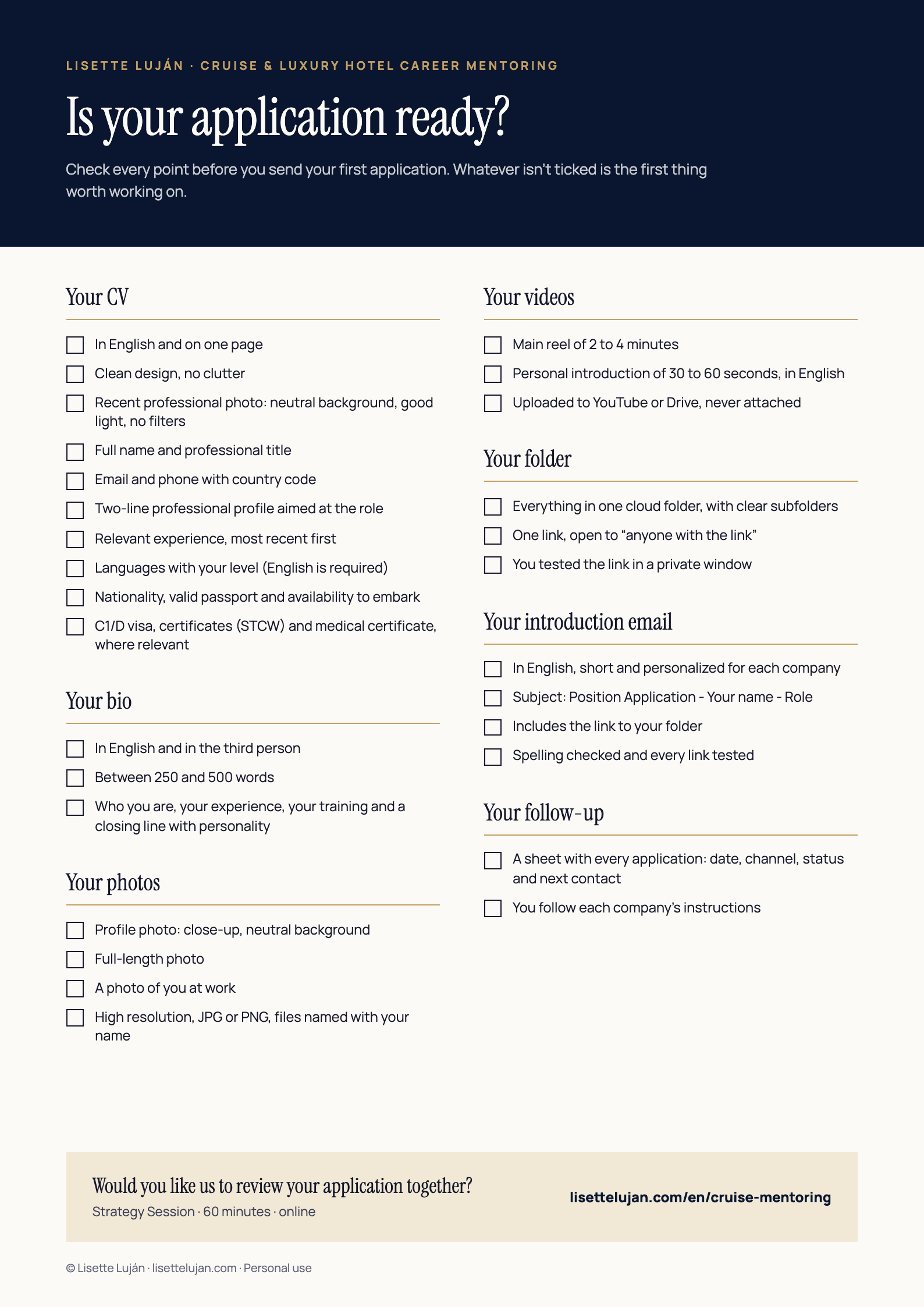
When I started applying to work on board, I learned that a cruise CV looks nothing like the one we use on land. Translating your usual CV into English is not enough: there are details the recruiter needs to see right away, and others they don’t need at all.
The basic rules
- Always in English.
- One page only.
- A clean design with no clutter.
- A recent professional photo: neutral background, good light, a friendly expression and no filters.
What goes at the very top
- Your full name.
- Your professional title (for example: Singer • Guitarist • Pianist, or the role you are aiming for).
- Your contact details: email, phone with country code, city and country of residence.
- A professional profile of two lines at most, aimed at the specific role.
The details you leave out on land, but not on board
The recruiter needs to know quickly whether you are ready to embark. So your CV should show:
- Your nationality.
- Your valid passport.
- Your availability to embark.
- A C1/D visa, if you have one.
- Your maritime certificates (for example STCW or Crowd Management), where relevant.
- Your seafarer medical certificate (ENG1, PEME or another accepted one), where relevant.
Experience, education and languages
- Your relevant work experience, most recent first.
- Your education, plus any training outside an institution if it applies.
- Your languages, with your level in each: basic, intermediate, advanced or native.
English is required. Other languages are a real plus: if you speak Portuguese, Italian or any other language, include it.
The finishing touch
If you have a Promo Reel, a website or professional social media, add the links. They are optional, but they let the recruiter see your work without asking you for anything else.
Your CV is only the beginning
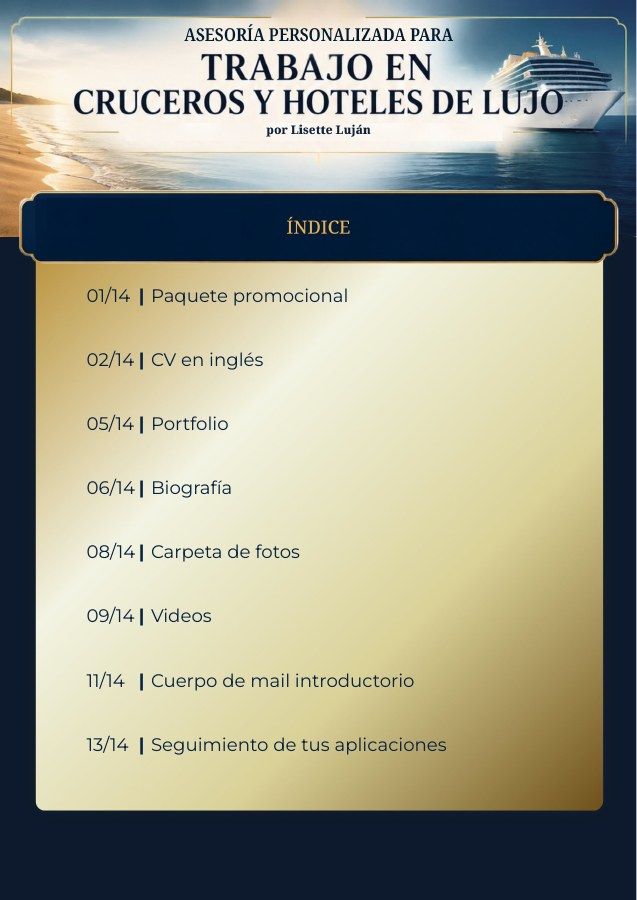
To apply you will also need a bio, photos, videos and an introduction email. I explain how to put all of that together in the promo package guide.