I worked on luxury cruise ships for more than three years. I started as part of a duo, continued as a solo Guitar Vocalist and was later hired as Lead Female Vocalist & Guitarist in a trio. Along the way I learned first-hand how to prepare to enter the industry and what agencies and cruise lines look for when they assess a candidate.
This is what I recommend to anyone who wants to work on board, whether you are a performer or work in any other department.
1. Be honest about your starting point
Before you send a single application, answer these questions:
- What is your experience and skill level today?
- Which role is realistic for you right now?
- Are you truly committed to this path, or just exploring?
- What is the best plan for your timeline?
Not every profile fits life on board, and it’s better to find that out early. Knowing where you stand saves you months of applications that go nowhere.
2. Research who hires for your profile
Every cruise line and agency has its own selection process. Before you apply, find out which companies hire for your role and how they prefer to receive applications: by email, through a job portal or another route.
Be wary of anyone who guarantees you a contract. Nobody can guarantee one. What you can control is how you present yourself.
3. Build a CV made for the industry
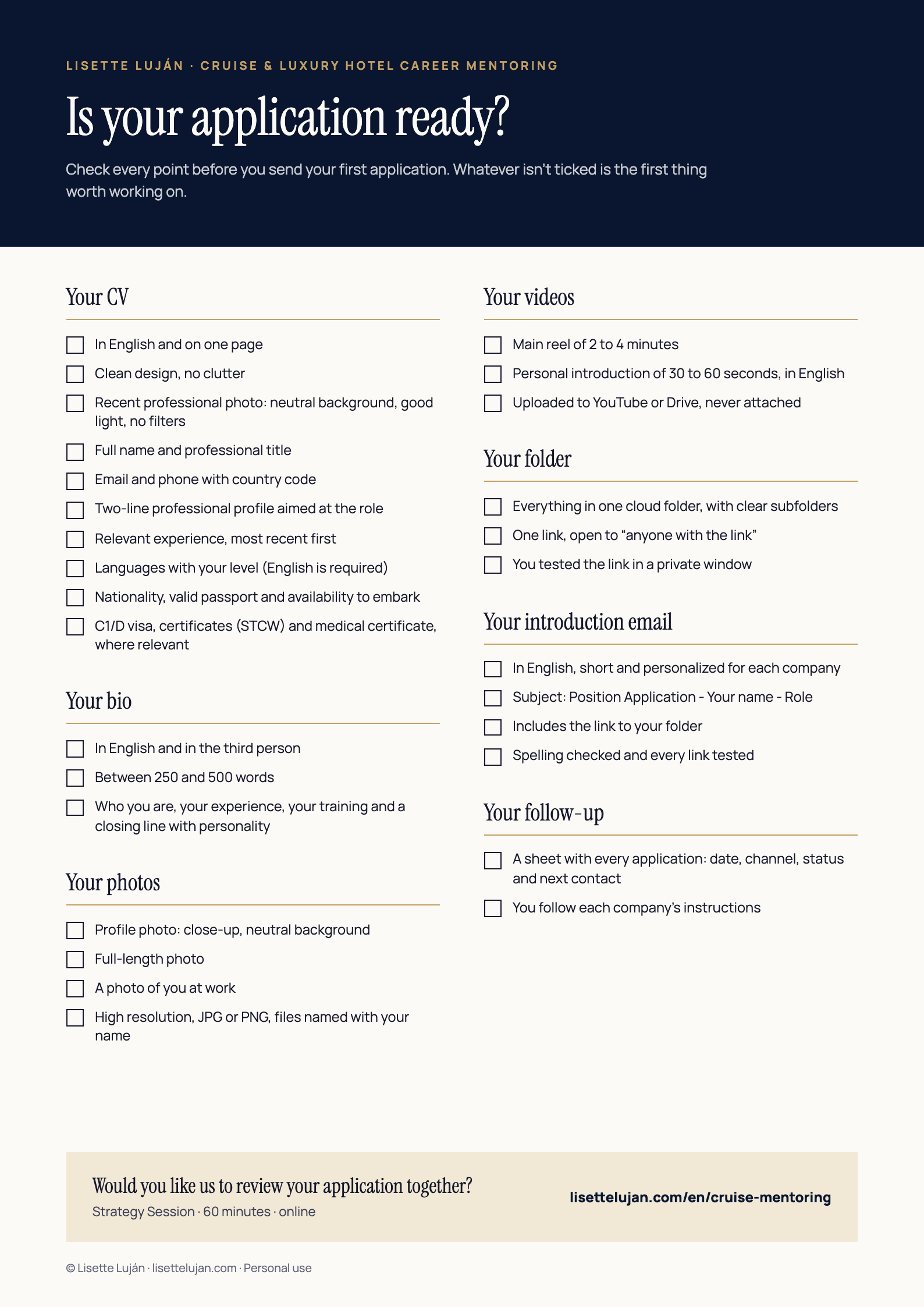
A cruise CV is not a traditional CV: it’s in English, it fits on one page and it includes details you would not usually add on land, such as your passport and your availability to embark. I explain it point by point in the cruise CV guide.
4. Prepare your promo package
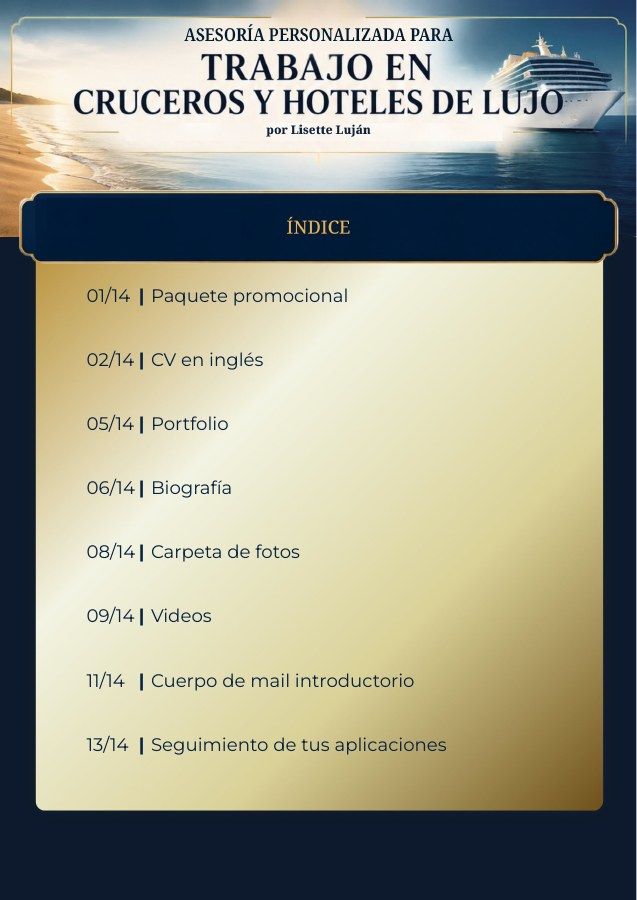
Besides your CV, agencies expect to see your bio, your photos, your videos and, depending on your profession, a portfolio. Together they make up your promo package. I explain what it includes and how to organize it in the promo package guide.
5. Apply the right way
Your email is usually your first contact with a recruiter. It should be short, clear, in English and personalized for each company: the recruiter should understand in 30 seconds who you are and what you are looking for. Instead of attaching heavy files, share a link to your folder.
And always follow each company’s instructions. If an agency asks you to apply only once or not to send follow-up emails, do exactly that.
6. Keep a record of every application
Once you start applying, log every application. It helps you know who you wrote to, what they replied and when it makes sense to write again.
- Company or agency
- Date you applied
- Channel: email, website, LinkedIn, Instagram or referral
- Status: no reply, replied, audition, in progress, hired or declined
- Next contact (for example, 15 days later)
- Notes: “apply only through the website”, “asked for an acoustic video”
7. Prepare for interviews and auditions, in English
When replies arrive, interviews follow and, if you are a performer, auditions too. Practice them in English, out loud and, if you can, with someone who will give you honest feedback.
What a first contract can offer
On top of the salary, most positions include flights, accommodation and meals during the contract. That lets many people save a significant part of their income while gaining international experience in one of the most demanding industries in the world.